


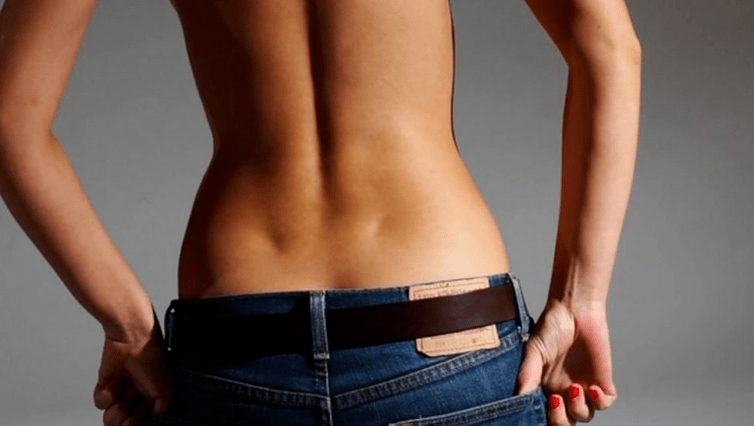
The lumbar region bears a greater load than all other parts of the spine.Osteochondrosis develops as a result of degenerative-dystrophic processes due to a decrease in the height of the disc.Marginal osteophytes develop along the edges of the vertebrae.At the same time, the intervertebral foramen narrows, the root is compressed, and symptoms of osteochondrosis appear.Treatment of lumbar osteochondrosis depends on the stage of the disease.
Osteochondrosis sometimes manifests itself in such a way that its symptoms "simulate" damage to other organs.In the ICD, he received a code - 10. We will try to understand all the intricacies in more detail.
International classification
According to ICD-10, osteochondrosis has the code M42 and is divided into subtypes.Code M42.0 according to ICD-10 indicates that this is a juvenile version, osteochondrosis is declared as Scheuermann-Mao or Calf disease.Code M42.1 according to ICD-10 gives an idea of the disease in adults.
If the variant of the disease is not specified, the code in ICD-10 will be M42.9.There are also complications of childhood osteochondrosis;their ICD-10 code is completely different.A complication occurs in the form of juvenile kyphosis, which causes Scheuermann-Mao disease.Its ICD code is 10 M40.0.
Reasons for appearance
Why everything appears is not yet fully known, one thing is certain: a violation of the structure of the intervertebral disc develops, which leads to further changes in the spine.The symptoms can be clearly traced after 35 years, the process of injuries is accelerated by the permanent static body position due to stress.But it's not just the load that's to blame;often the disease is of genetic origin.This can be caused by flat feet, especially grade 3 or 4.
Symptoms
The insidiousness of this spinal disease is undeniable, and it only progresses with time.In general, doctors distinguish four stages of the development of this pathology.
The first degree does not cause pain, the person can sit calmly and without pain, but the changes characteristic of the disease already appear in the core of the disc.The ligaments that strengthen the vertebrae can also suffer.Unpleasant sensations can be detected locally, which can radiate far from the problem area.As a result of disturbances in the innervation of the vessels of the lower limbs, coldness is observed in them.
In the second degree, the fibrous ring of the intervertebral disc is destroyed.Instability appears in the lumbar spine;increased mobility and local tension can be observed in the lower back muscles.The person feels constant fatigue, discomfort in the back and insecurity.
In the third degree, osteochondrosis leads to the fact that the fibrous ring completely loses its strength and bursts, while the nucleus pulposus exceeds its limits, and thus a hernia develops.The roots of the spinal nerves are compressed, symptoms appear, mainly pain.In the area of innervation of the compressed nerve root, sensitivity is completely or partially lost.Morning or daily exercise causes significant pain.In the initial stage, a burning, tingling sensation bothers you, then the turn of numbness comes.Decreased or absent sensitivity is considered the cause of paralysis, resulting in muscle atrophy.
Based on the typical zones of sensitivity damage, it can be assumed in which segment the fault occurred.If the fibers of the sciatic nerve (the body's thickest nerve) are damaged, Lassègue's sign will be positive;easy to check at home.You have to lie on your back, a stranger helps you raise your straight leg at the knee.If the symptom is positive, the pain intensifies;if the leg is bent at the knee joint, it disappears completely.
In case of a significant hernia, the function of the spinal cord may be impaired.You can often observe the symptoms of compression of the "cauda equina", which often manifests itself in osteochondrosis, it is a bundle of nerves that leaves the spinal cord, passing through the lumbar and sacral spines.Symptoms include limited movement and tenderness in the lower extremities.In addition, dysfunctions of the pelvic organs, very often the bladder, also occur.
In the fourth stage, the intervertebral joints and ligaments are involved in the degenerative process and symptoms of spinal instability appear.Arthrosis of the joints between the vertebrae, spondyloarthrosis develops.At this stage, there is practically no pain, but at the same time the ability to move almost completely disappears;exercise or gymnastics becomes a real problem for a person.
Due to damage to the various nerves innervating the internal organs, their function may be impaired.Sometimes a person struggles with a problem for a long time, but in fact the cause is osteochondrosis.In addition to having characteristic symptoms, osteochondrosis of the spine must be diagnosed instrumentally.
Diagnostics
The symptoms are important, but the image of the lumbar spine can also confirm the development of osteochondrosis.It shows damage to the joints of the vertebrae, a decrease in the height of the disc and a narrowing of the intervertebral foramen.The spine is photographed in two views;further functional tests may be necessary.
The presence of a herniated disc can be confirmed by MRI;characteristic changes will be visible in the image.A CT scan shows the structure of the tissue more clearly;it is particularly convenient because the techniques are performed in different planes and sections.It is possible to look at the place where the symptoms appear and bother you.
Treatment
Before treating lumbar osteochondrosis, you should consult a neurologist.Medicines have always effectively helped to get rid of the disease.They are prescribed in approximately 10-day courses, supplemented with all physical procedures, daily exercises, gymnastics, massage.
With the help of medicines, you can effectively eliminate the severe pain caused by inflammation and swelling.After hospital treatment, taking medication and following medical instructions can be continued at home.
Everyone starts with non-steroidal anti-inflammatory drugs or NSAIDs.Due to the fact that they reduce the inflammatory process in osteochondrosis, swelling and pain disappear.The doctor selects the drugs: there are many contraindications.But at the same time, they quickly relieve the condition;within a few days, the person will get rid of the pain and will sit normally, osteochondrosis will recede.
The treatment will not be complete if you do not use drugs aimed at restoring the cartilage structure.They are called chondroprotectors and in the initial stage contribute to better nutrition of the cartilage and the restoration of the disc tissue.You have to take them for a long time, even at home.
Muscle relaxants make it possible to get rid of spasms in the lower back muscles.This condition is a response to compression of the roots.
Medicines that improve microcirculation are needed.All this removes the swelling in the place where the compression happened, so the nerve cells get more oxygen and nutrients.Exercise and massage, which can be done at home to relieve pain, have a similar effect.
If your back hurts a lot and sitting is a real problem, you'll need pain relievers.This group of drugs allows you to quickly get rid of the manifestations of the disease.
Vitamins improve the nutrition of the nerve roots and strengthen them.If this group of drugs is used, the treatment is much more effective.An ointment that should be applied to the area of maximum pain is excellent in combating the symptoms of pain.
The doctor prescribes an ointment if your back hurts a lot and you can't sit.Penetrating the tissue, the ointment has an anti-inflammatory effect on the roots.The ointment can be used as a compress at night.Apply the ointment to the painful areas three times a day.
Physiotherapy
Complete rehabilitation treatment consists of:
- Physiotherapy;
- physiotherapy;
- massage;
- traction;
- manual therapy;
- reflexology.
Therapeutic gymnastics consists of applying loads to the lumbar spine.With its help, compressed roots are released, muscles are strengthened, and the correct posture is formed, which is then supported by training.Gymnastics allows you to increase the range of motion and make the ligaments more flexible.Gymnastics is selected individually for each person.
The technique is as easy to implement as the exercise, helps to normalize blood circulation and improves metabolism.Gymnastics improves the nutrition of the intervertebral disc and increases the space between the vertebrae.Due to the formation of the corset, pain and stress on the spine is reduced.Gymnastics is performed under the supervision of a specialist, and it is necessary to exercise every morning, this prevents the development of osteochondrosis.
Physiotherapy methods, like exercises, are very widely used.Low frequency currents, alternating current, ultrasound, laser and more are especially useful.You can also use an ointment with ultrasound.The methods relieve inflammation, pain and swelling.The most popular:
- UHF;
- diode speaker;
- magnet;
- shock wave therapy;
- ultrasound;
- electrophoresis.
Massage is very often used at the stage when the pain has subsided.Similar to physical exercise, massage helps nourish the cartilage and improves metabolic processes.Massage is a combination of special techniques: rubbing, kneading, caressing and shock vibration.
Correctly performed massage is the key to successful treatment and subsequent recovery.The massage can only be performed by a specialist.You can also use an anti-inflammatory ointment.Massage relieves muscle spasms, improves blood flow and strengthens the back.
Manual therapy is also a massage, but with a special technique.Its effect is the same as that of a massage.
Towing is done with specially selected weights and techniques.The procedure helps to increase the space between the vertebrae, relieves pain, and restores the anatomical axis of the spinal column.
Acupuncture is based on the effect of needles on the active points of the human body.The technique is particularly recommended for severe pain syndrome.